
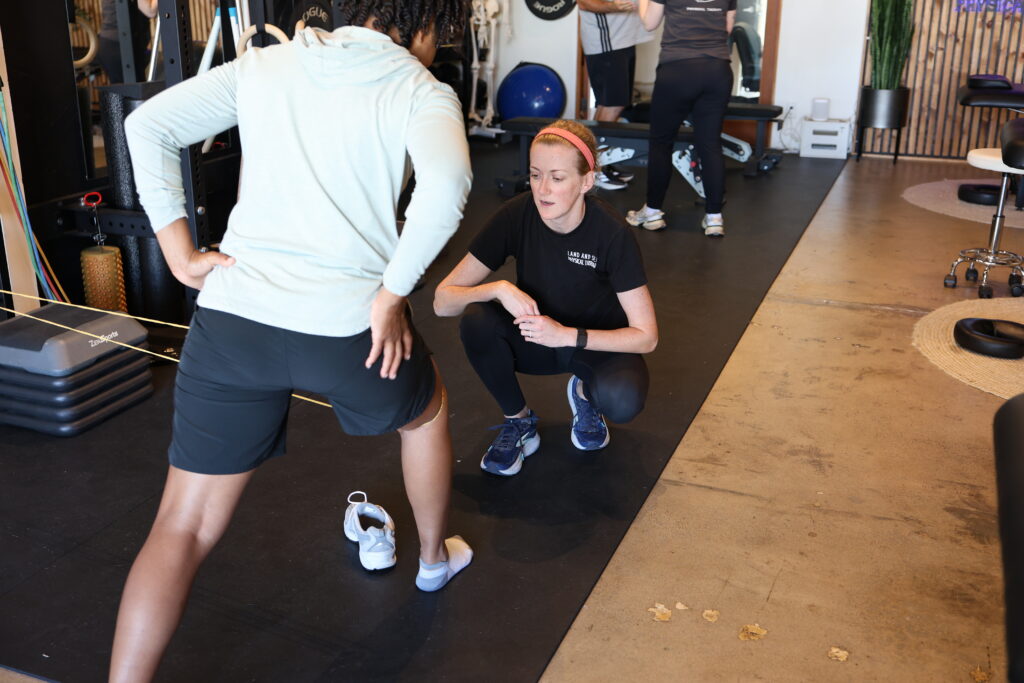
For some people, this position can cause the front of the femur to come into contact with the front edge of the hip socket. This can put pressure on the tissues inside the joint and create a pinching sensation at the front of the hip.
This type of hip impingement is different from a strained or overworked hip flexor. That’s an important distinction because stretching a muscle that isn’t causing your pain is unlikely to fix the problem.
A Simple Way to Check for It
One test commonly used to assess hip impingement is the FADIR test. To perform it, lie on your back and bring your knee toward your chest. Then move your knee across your body while turning your leg inward.
If this position reproduces the same sharp or pinching pain you feel during a deep squat, it may suggest that your symptoms are coming from the hip joint rather than the surrounding muscles.
However, the FADIR test alone cannot diagnose hip impingement. A physical therapist can perform a more complete assessment to determine what’s causing your symptoms and what may be contributing to them.
Why This Reframe Matters
If you’ve been stretching your hip flexors, foam rolling your quads, or doing general hip mobility exercises without much improvement, you may be focusing on the wrong area. When your symptoms are related to how your hip joint moves under load, simply trying to make the surrounding muscles more flexible may not address the real problem.
A better approach may include improving hip mobility, strengthening the muscles that support the joint, and adjusting your squat position to reduce irritation. As your symptoms improve, you can gradually work back toward deeper squat positions and help your hip become more comfortable with the movement.
The goal isn’t to stretch your way out of the problem. It’s to understand why the pain occurs and improve how your hip handles the position that triggers your symptoms.
Moving Forward With the Right Approach
If you feel a familiar pinching sensation at the front of your hip during a deep squat, it’s worth having the area properly assessed. Hip impingement can often be managed with a structured approach that focuses on improving movement, building strength, and gradually returning to deeper positions.
You may not need to stop training altogether. With the right modifications and a gradual progression, you can continue working toward your goals while giving your hip time to adapt.
If you want to contact us or book an appointment, check our business profile page.

Dr. Jonny Blue is a Doctor of Physical Therapy and founder of Land and Sea Physical Therapy in Oceanside, CA. He specializes in orthopedic PT, root cause methodology, and helping active adults in North County San Diego get back to the activities they love without surgery or pain medication.