Tennis elbow rarely gets better by simply resting your forearm and waiting for the pain to fade. The problem may not start at your elbow at all. In some cases, weakness around your shoulder blade and mid-back may also play a role in why your elbow continues to hurt.
If you have pain around the bony bump on the outside of your elbow, called the lateral epicondyle, you may have been told to rest, ice it, wear a brace, and wait it out. But this approach can miss an important part of the problem. Research has found a link between lateral elbow pain and weakness in the muscles of your mid-back, including the middle and lower trapezius.
Why the Elbow Isn’t the Whole Story
Tennis elbow often develops from repetitive gripping and reaching. This can happen during work, racket sports, weightlifting, or other daily activities. The muscles in your forearm take on a lot of stress during these movements, and many of these muscles attach near the outside of your elbow.
But your arm doesn’t work alone. Your wrist, elbow, shoulder, shoulder blade, and mid-back all work together to control movement and handle load. If the muscles around your shoulder blade are weak or aren’t working well, your elbow and forearm may have to take on more stress than they can handle.
Over time, this extra stress may contribute to ongoing elbow pain. That’s why treating only the painful area may not be enough to fully address the problem.
What Actually Helps?
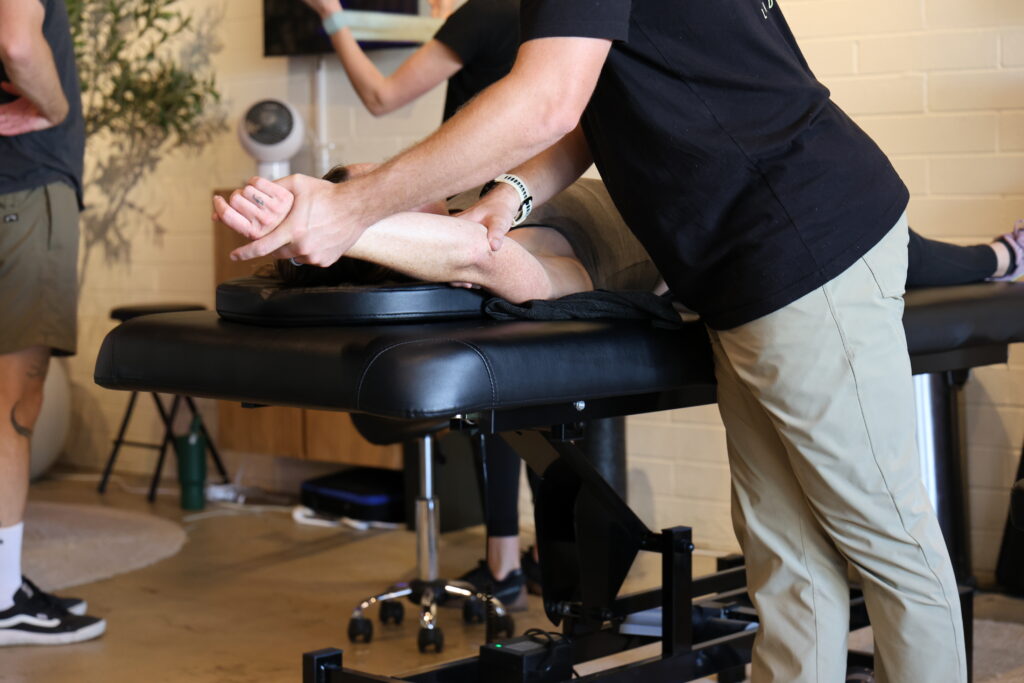
A good treatment plan should address more than just the sore spot. This may include mobility work for your elbow, soft tissue work for your forearm, and progressive strengthening to help the muscles around your elbow handle more load.
It’s also important to strengthen the muscles around your shoulder blade and mid-back. Resistance band exercises can help improve strength and control in these areas, giving your upper body more support during gripping, reaching, and lifting activities.
This part of treatment is often overlooked, but it may play an important role in how your arm handles stress and movement. By addressing the entire chain, you can work toward improving both your current symptoms and your ability to handle future demands.
Building Functional Strength
Once your isolated strength improves, it’s time to focus on movements that carry over into real life. This may include exercises like farmer carries, suitcase carries, and loaded holds that challenge your grip and forearm while also working your shoulder and core.
These exercises can mimic many of the activities that cause pain in everyday life and at the gym. Think about carrying groceries, picking something up, or gripping a barbell during a lift. Gradually increasing the load helps your body build the strength and capacity it needs to handle these activities.
Why Looking Beyond the Pain Matters
It’s easy to focus on the spot that hurts, but tennis elbow is a great example of why you may need to look beyond the painful area. Your forearm muscles don’t work alone. They rely on your shoulder blade and mid-back for support and stability during movement.
That’s why it’s important to build strength throughout the entire chain instead of focusing only on the forearm. Looking at the bigger picture may help address the factors contributing to your pain and give your body the support it needs to get back to the activities you enjoy.
Putting It Into Practice
If you’ve been dealing with lateral elbow pain, it may be time to look beyond rest and forearm stretches. A complete treatment plan may include elbow mobility, soft tissue work, progressive forearm strengthening, mid-back strengthening, shoulder blade exercises, and functional carries or grip work as your tolerance improves.
The goal isn’t just to reduce your elbow pain. It’s to build the strength and capacity your body needs to handle the activities you enjoy, so you can get back to doing what you love with more confidence.
If you want to contact us or book an appointment, check our business profile page.

Dr. Jonny Blue is a Doctor of Physical Therapy and founder of Land and Sea Physical Therapy in Oceanside, CA. He specializes in orthopedic PT, root cause methodology, and helping active adults in North County San Diego get back to the activities they love without surgery or pain medication.