
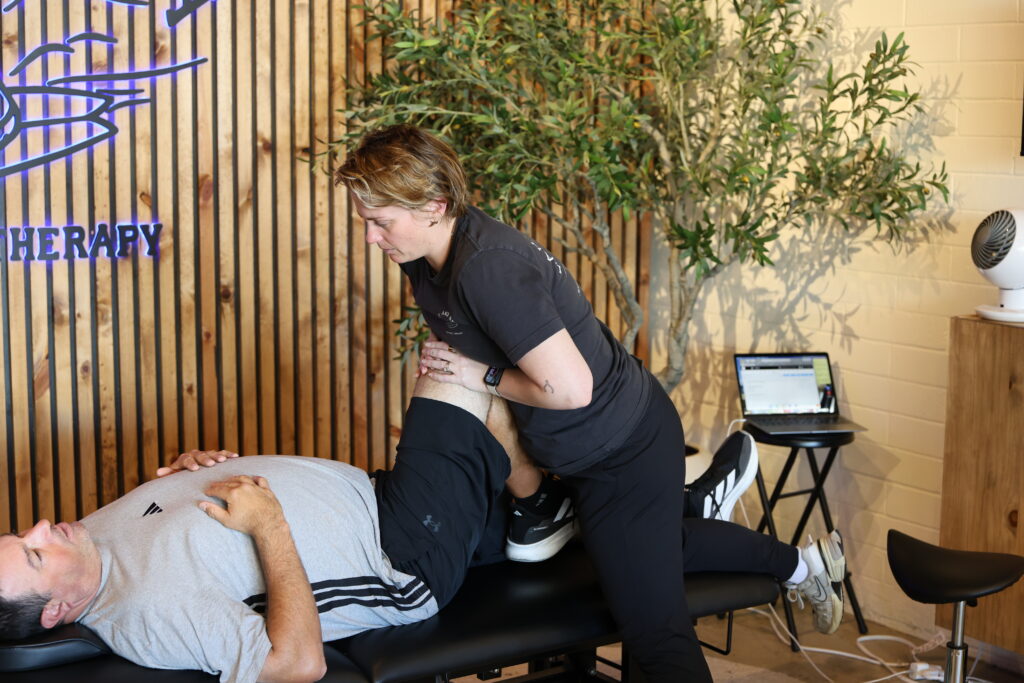
One of the most common mistakes people make after an abdominal strain is jumping straight into exercises they already know, like sit-ups, crunches, and leg raises, and calling it rehab.
The problem isn’t that these exercises are inherently bad. The problem is that they can place significant stress on healing tissue before it’s ready. If you load an injured muscle too aggressively, you may irritate the tissue and delay your recovery instead of speeding it up.
Effective abdominal strain rehab requires a gradual progression. You start with what your body can tolerate, then slowly increase movement, resistance, and eventually speed. Each step should be based on how your body responds, not simply how much time has passed.
Start Where Your Body Can Tolerate
Early in recovery, the goal is to load the abdominal muscles without placing excessive stress on the injured tissue.
This often means starting with controlled, pain-free exercises that challenge the core without requiring large amounts of trunk movement. As your tolerance improves, you can gradually introduce more range of motion and resistance.
The key is progression. You shouldn’t jump from pain-free daily activities straight into high-load abdominal exercises simply because you feel better.
Your body may feel fine during normal activities but still not be ready for the demands of exercise or sport. That’s why rehab should be based on your ability to tolerate increasing levels of stress.
Strength Comes Before Speed
As you recover, your rehab should progress beyond basic strength.
Your abdominal muscles don’t just stabilize your body. They also help produce and control powerful movements. This becomes especially important for athletes who need to throw, swing, kick, sprint, or change direction quickly.
These movements place much higher demands on the trunk than a slow, controlled exercise.
Before returning to high-speed activities, your body needs to rebuild its ability to tolerate progressively higher levels of load. This is why returning to sport isn’t simply about whether you can perform a few core exercises without pain.
You also need to be able to handle the speed, force, and repetitive demands of your specific activity.
Don’t Ignore the Rest of Your Body
An abdominal strain may not be caused by the abdominal muscles alone.
Your trunk works together with your hips, pelvis, spine, and shoulders to create and control movement. If one area isn’t doing its job effectively, another area may have to compensate.
That’s why a good rehab program should look beyond the injured tissue. Your therapist may assess your overall movement, strength, mobility, and the specific activities that contributed to your injury.
The goal isn’t just to make the pain go away. It’s to understand why the injury happened and what needs to change to help prevent it from happening again.
Recovery Is a Process
Abdominal strains don’t all heal on the same timeline. Your recovery depends on the severity of the injury, the tissue involved, your activity level, and the demands you’re trying to return to.
Rather than following a random list of abdominal strain exercises, your rehab should progress based on how your body responds.
The goal is to gradually restore:
- Strength
- Range of motion
- Load tolerance
- Speed and power
- Sport-specific movement
Each stage prepares you for the next. If you skip a step, you may find yourself struggling when you return to more demanding activities.
The Bottom Line
If you’ve been doing random core exercises but your abdominal strain keeps coming back, the problem may not be a lack of effort. You may simply be missing a structured progression.
The right rehab program doesn’t just strengthen your abs. It prepares your entire body to handle the demands that caused the injury in the first place.
Instead of asking, “What exercise should I do for my abdominal strain?” a better question is: “What can my body tolerate right now, and what’s the next step?”
If you want to contact us or book an appointment, check our business profile page.

Dr. Jonny Blue is a Doctor of Physical Therapy and founder of Land and Sea Physical Therapy in Oceanside, CA. He specializes in orthopedic PT, root cause methodology, and helping active adults in North County San Diego get back to the activities they love without surgery or pain medication.