If you surf, paddleboard, or do any sport that involves overhead pulling through water, your shoulder is doing something genuinely demanding. Shoulder problems are one of the most common things we treat at Land and Sea PT, and a significant portion of those patients are water sports athletes who kept pushing through discomfort until they couldn’t anymore.
Why water sports are different
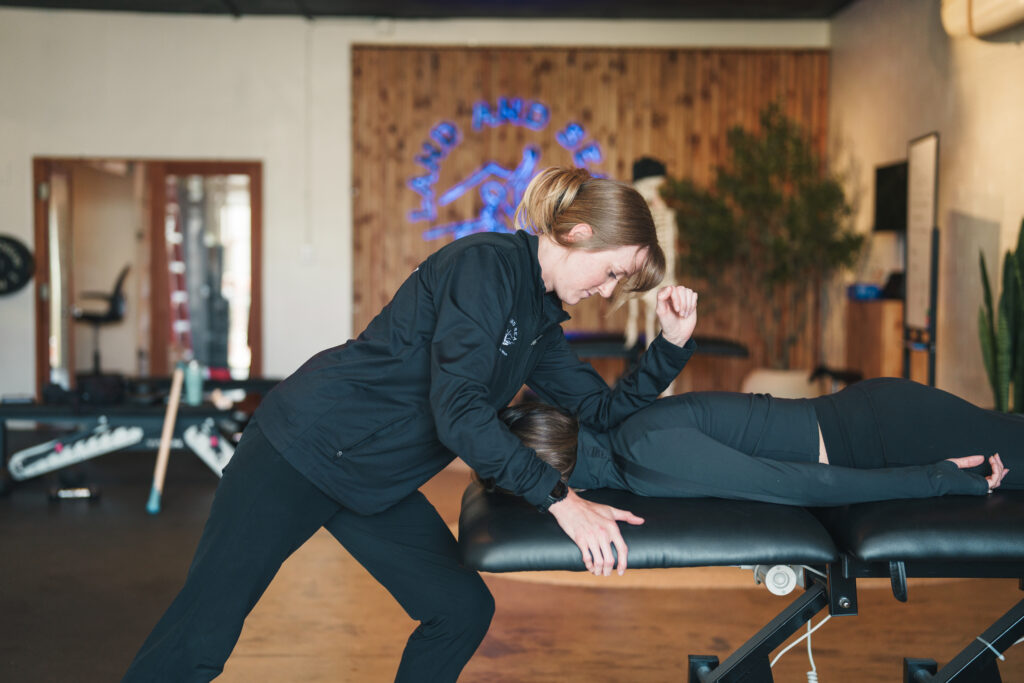
For most surfers, and overhead athletes in general, the shoulder often isn’t the source of the problem. At least, it’s rarely the ONLY source of the problem. Often, the upper back (Thoracic Spine) is very stiff and doesn’t rotate enough, the lats and the pecs are very tight and restricting normal movement, and there are two muscles in the back of the shoulder that aren’t doing enough (infraspinatus and teres minor).
The combination of these factors, as well as the overhead and rotational demands of paddling and surfing, load the rotator cuff in ways that most shoulder exercises don’t prepare you for. You’re doing these movements under fatigue, with rotation, against resistance, repeatedly for hours. The position most paddlers spend the most time in is also one of the positions where the rotator cuff has the least mechanical advantage.
All of these factors translate into pain in the front and side of the shoulder with duck diving, popping up, or cranking a backhand turn.
The scapula is almost always involved
The scapula is supposed to rotate upward as the arm goes overhead, creating space in the joint. However, when your upper traps (neck muscles) are dominant and overused (almost always present in surfers with shoulder pain) the shoulder blade doesn’t move correctly, the space shrinks and tissue gets compressed with every stroke. As stated above, poor scapular movement is often driven by tight pec minor and lats, weak lower trapezius, an underactive serratus anterior and infraspinatus, and dominant upper traps,.
Building a shoulder that can handle the ocean
The goal isn’t just getting out of pain. It’s building a shoulder that can handle what you’re actually asking of it: rotator cuff strength through full range, scapular control under load, proper rotation and extension of the Thoracic Spine, and the endurance to maintain good mechanics when you’re tired.
At Land and Sea PT in Oceanside, we work with North County water sports athletes regularly. If shoulder pain is affecting your time in the water, come in for an assessment.
If you want to contact us or book an appointment, check our business profile page.

Dr. Jonny Blue is a Doctor of Physical Therapy and founder of Land and Sea Physical Therapy in Oceanside, CA. He specializes in orthopedic PT, root cause methodology, and helping active adults in North County San Diego get back to the activities they love without surgery or pain medication.