
Most people who develop burning, tingling, or pain shooting down their leg assume they have injured a muscle. However, when leg symptoms are worse than back pain, especially when they travel below the knee, an irritated nerve root is usually the cause. That distinction changes how we approach treatment and is one of the first things we clarify during an evaluation.
People often use the term “sciatica” to describe pain, burning, numbness, tingling, or weakness that travels down the leg. While these symptoms involve the sciatic nerve, the problem usually starts higher up. Several nerve roots join together in the lower back to form the sciatic nerve, and irritation typically occurs at one of those nerve roots before they merge.
The location of your symptoms can provide important clues. Pain in the outer shin, heel, or arch of the foot may indicate involvement of different nerve roots. Understanding which nerve root is affected helps guide both diagnosis and treatment.
Understanding Sciatica Terminology
Healthcare providers often use more specific terms than “sciatica.” Lumbar radicular pain refers to pain that travels down the leg because a nerve root in the lower back has become irritated. Lumbar radiculopathy refers to neurological changes caused by that same irritation. These changes can include numbness, weakness, or altered reflexes.
Both conditions can occur together, which is why sciatica works as a useful umbrella term. However, the distinction matters because symptoms such as weakness or significant numbness may require a more urgent evaluation.
Disc herniations are the most common cause of nerve root irritation. When disc material pushes toward the nerve canal, it can compress the nerve and trigger local inflammation. Both processes can increase nerve sensitivity and create symptoms that extend all the way into the foot, even though the source of the problem is in the spine.
How Physical Therapists Evaluate Sciatica
A thorough evaluation does not begin with imaging. It begins with a detailed history and a physical examination. Your clinician will ask whether you have numbness, tingling, or a pins-and-needles sensation in your leg. They will also ask whether your symptoms travel below the knee and whether the leg pain feels worse than the back pain. These findings increase the likelihood that a nerve root is involved.
The physical examination typically includes testing sensation, muscle strength, and reflexes. Your therapist may assess movements such as lifting your foot, pushing up onto your toes, or resisting pressure through the leg. Reflexes at the knee and ankle also provide valuable information about nerve function.
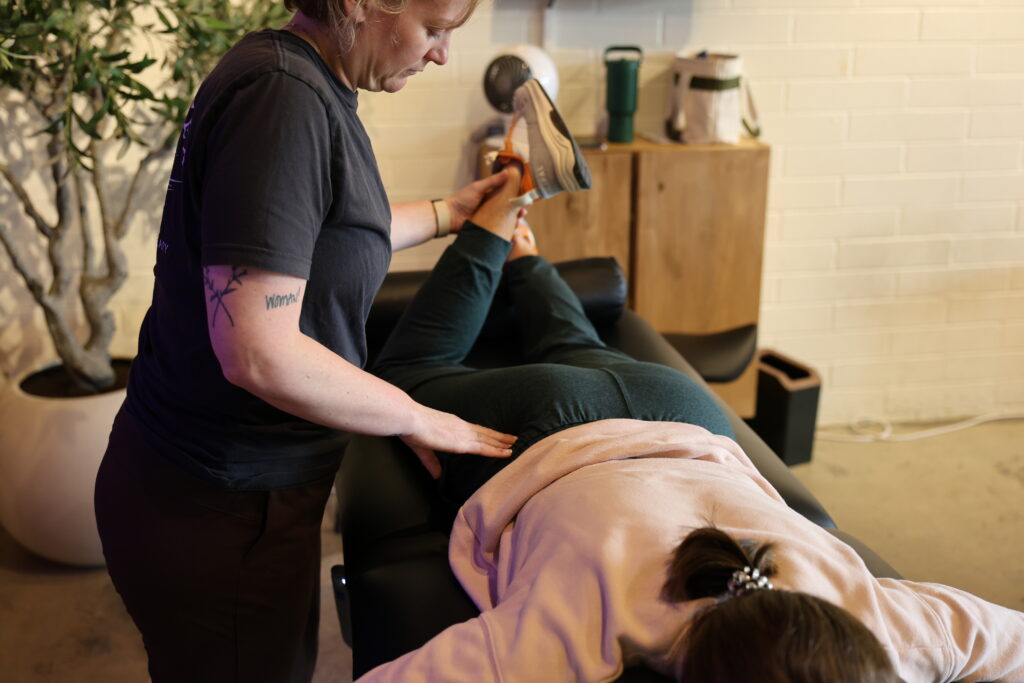
Special tests, such as the straight leg raise and slump test, place tension on the nerve to determine whether that reproduces your symptoms. Together, the history and examination often provide enough information to develop an effective treatment plan.
Do You Need an MRI for Sciatica?
Most people with sciatica do not need an MRI right away. Imaging is usually reserved for situations involving severe neurological deficits, concerning medical findings, or discussions about surgery.
One reason clinicians are cautious with imaging is that spinal changes are extremely common in people who have no symptoms at all. Research has shown that disc bulges, disc degeneration, and other age-related findings frequently appear on MRI scans in healthy individuals. The prevalence increases with age.
Because of this, MRI findings do not always explain a person’s symptoms. In many cases, the scan reveals changes that are unrelated to the current problem. The goal of rehabilitation is not to create a perfect MRI. The goal is to improve function, reduce symptoms, and help you return to normal activities.
What Recovery From Sciatica Looks Like
The good news is that sciatica has a favorable natural history for most people. Symptoms often improve substantially over weeks to months, even without aggressive intervention.
That does not mean doing nothing. Recovery usually involves gradually increasing activity, restoring confidence in movement, and exposing the nervous system to appropriate levels of load. The process takes patience, but most people improve with time and consistent effort.
Walking remains one of the most underrated tools available. Short walks spread throughout the day provide gentle loading through the spine, improve circulation, and help maintain overall activity levels. Walking also requires no equipment and can begin early in the recovery process.
As symptoms improve, treatment often progresses to exercises that match your specific presentation. Some people respond best to strengthening exercises. Others benefit more from repeated movements or nerve gliding exercises. The right program depends on your symptoms and how your body responds to different movements.
The Importance of Getting the Right Diagnosis
Many people spend weeks or months treating a muscle problem that does not actually exist. If an irritated nerve root is driving your symptoms, the treatment approach should reflect that.
A proper evaluation can identify the source of your pain, determine whether neurological changes are present, and guide an appropriate rehabilitation plan. The sooner you understand what is causing your symptoms, the sooner you can focus on the treatments most likely to help.
If you’d like to learn more or schedule an appointment, visit our business profile page.

Dr. Jonny Blue is a Doctor of Physical Therapy and founder of Land and Sea Physical Therapy in Oceanside, CA. He specializes in orthopedic PT, root cause methodology, and helping active adults in North County San Diego get back to the activities they love without surgery or pain medication.