The biggest mistake people make with front-of-shoulder pain is assuming that a special test or MRI can tell them exactly what’s wrong. Usually, it can’t.
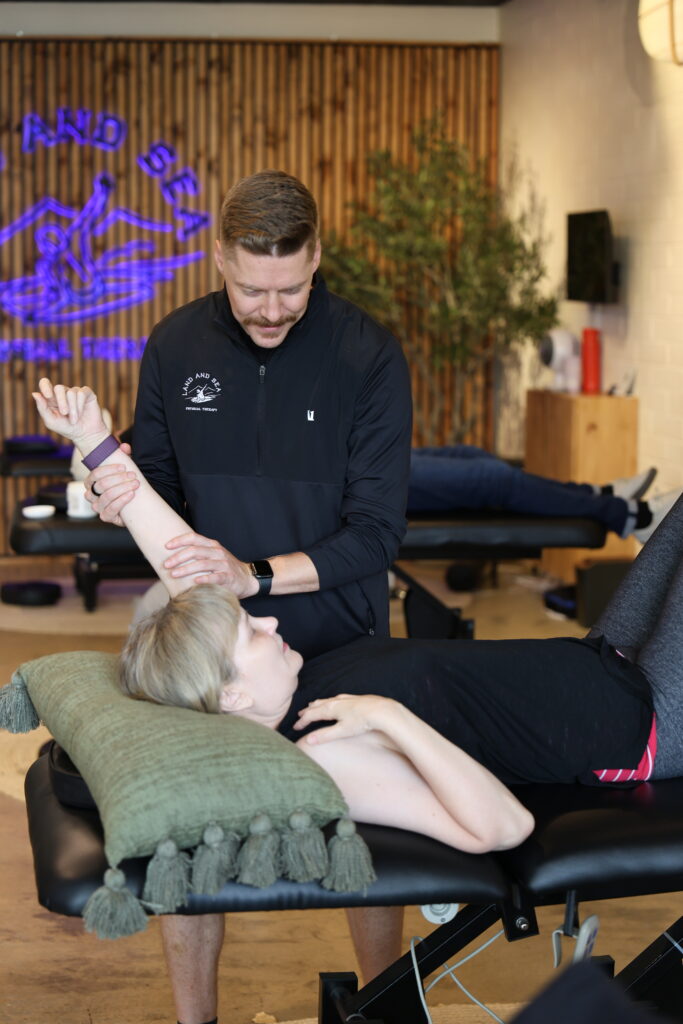
If you’ve had a shoulder exam where someone pressed on a specific spot or performed a special test to “confirm” biceps tendon pain, you should know that research shows these tests aren’t very reliable for pinpointing the biceps tendon as the source of pain.
Pain in the front of the shoulder is often assumed to come directly from the long head of the biceps tendon because of where it sits. However, clinically proving that is much harder than it sounds.
Why Palpation and Special Tests Fall Short
Palpation means pressing on a specific area to see if it reproduces your pain. It sounds simple and convincing when it works. However, research shows that palpation isn’t a reliable way to diagnose biceps tendon problems on its own.
The same goes for many of the classic special tests used during shoulder exams. Multiple structures sit close together in this area. Because of this, pressing on one spot or performing one movement can reproduce pain from a nearby structure instead of the one being tested.
This matters because you may leave an appointment believing the biceps tendon is the only problem. That can lead you toward a treatment plan that ignores other factors contributing to your shoulder pain.
The Myth of the “Isolated” Biceps Tendon Problem
Imaging research provides another important piece of the puzzle. Biceps tendon problems rarely exist on their own. Rotator cuff involvement is often present at the same time.
The idea that one isolated structure is responsible for all your pain is often an oversimplification. Your shoulder works as a system. The muscles and tendons around the joint constantly interact during movement.
Treating just one piece while ignoring the rest is like tightening one bolt on a wobbly table and expecting the entire table to stop wobbling.
This is also why generic advice like “just stop lifting” or “just stretch it more” often falls flat. If your rotator cuff isn’t providing enough support, the biceps tendon may continue to get overloaded no matter how much you try to rest it.
What This Means for Your Recovery
Instead of focusing on one diagnosis or one test result, a better approach looks at how your entire shoulder functions.
This includes evaluating:
- How your shoulder blade moves
- How well your rotator cuff is working
- Which movements and loads trigger your pain
- Whether certain exercises, such as bench press, pec flys, or dips, make your symptoms worse
- Whether movements like reaching behind your back cause pain
From there, your treatment plan may include temporarily modifying movements that aggravate your symptoms. It may also involve strengthening the muscles that support your shoulder, including the rotator cuff and the muscles around your shoulder blade.
Over time, the goal is to gradually restore your full range of motion and build your tolerance to load.
Exercises such as external rotation work and posterior shoulder strengthening can help build a stronger support system around the joint. These may include exercises commonly referred to as A’s, T’s, and Y’s.
The goal isn’t just to “fix” the biceps tendon. It’s to improve how the entire shoulder works so the biceps tendon isn’t left to handle more than its share of the workload.
The Takeaway
Don’t let a single test result or a confident-sounding diagnosis convince you that your shoulder pain has one simple cause.
The research suggests that front-of-shoulder pain often involves multiple structures working together. Your recovery plan should reflect that.
A thorough evaluation should look beyond one painful spot or one special test. Understanding how your shoulder moves, how it handles load, and which structures may be contributing to your symptoms can help guide a more effective treatment plan.
If you want to contact us or book an appointment, check our business profile page.

Dr. Jonny Blue is a Doctor of Physical Therapy and founder of Land and Sea Physical Therapy in Oceanside, CA. He specializes in orthopedic PT, root cause methodology, and helping active adults in North County San Diego get back to the activities they love without surgery or pain medication.