
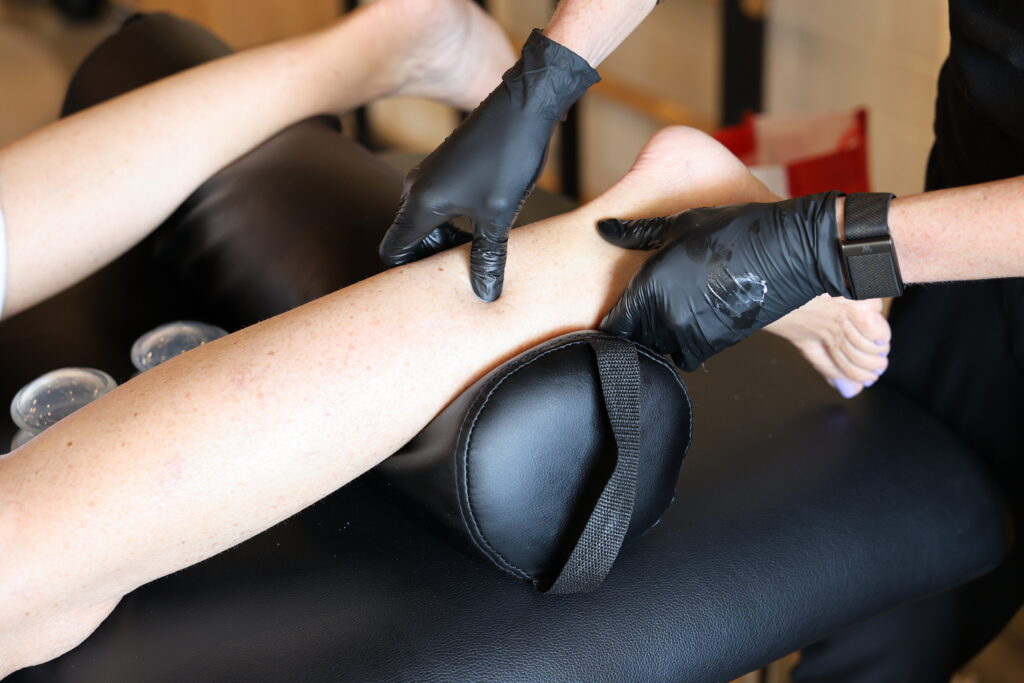
Shin pain in runners exists on a spectrum. On one end is shin splints, muscle and connective tissue overload that’s uncomfortable but manageable. On the other end is a stress fracture, an actual crack in the bone that requires a very different response. Getting this wrong has real consequences.
How to tell them apart
Shin splints typically produce a diffuse ache along a broader area of the shin, usually on the inner border. The pain often warms up during a run and returns afterward. Stress fractures produce pain that is sharply localized to a specific point on the bone. You can usually put a finger on the exact spot. The pain tends to get progressively worse during a run rather than warming up.
The hop test: can you hop on one leg without sharp, localized pain? If yes, stress fracture is less likely. If you cannot hop without significant pain at that specific point, imaging before loading further is the right call.
Managing shin splints
Shin splints respond to load management and progressive tissue strengthening. We rarely tell runners to stop running completely. We modify load, build a strengthening program, and address foot mechanics. A low tolerance to load is often one of the factors we need to address. Resting, or not running, places less load on the tissue thereby reducing the tissue’s load tolerance even further. This translates into the pain starting sooner, and feeling more intense, the next time you do try and run again.
This is bad. We don’t want this.
Managing stress fractures
A stress fracture requires a period of protected weight-bearing or a dramatic reduction in loading. The timeline varies: low-risk fractures typically take 6 to 8 weeks. High-risk fractures can take 3 to 6 months. Reducing the load and strain in these cases is important, while combining other healing modalities such as Stemwave and Hyperbaric Oxygen Therapy.
Where StemWave helps
For stress fractures, StemWave may support faster bone repair. The acoustic wave stimulates angiogenesis and bone healing activity. We use StemWave selectively for bone stress injuries as part of a comprehensive return-to-activity plan.
If you have shin pain that’s getting worse with running or is sharply localized, get it assessed before continuing to train. At Land and Sea PT in Oceanside, come in and let’s figure out exactly what’s going on.
If you want to contact us or book an appointment, check our business profile page.

Dr. Jonny Blue is a Doctor of Physical Therapy and founder of Land and Sea Physical Therapy in Oceanside, CA. He specializes in orthopedic PT, root cause methodology, and helping active adults in North County San Diego get back to the activities they love without surgery or pain medication.