
Note: we technically don’t use the term shoulder impingement anymore, we call it subacromial pain syndrome. But we’ll use the old term here since most people are familiar with it.
Shoulder impingement gets diagnosed a lot. The problem is, the treatment that normally follows usually misses the point entirely. Most people with shoulder impingement are given rotator cuff strengthening exercises, told to avoid overhead movements, and sent on their way. That’s the best case. The worst case is a surgeon tells them they need to shave off the end of the acromion (a completely unnecessary surgery). Here’s what’s almost always being missed: the shoulder blade and inhibition of 2 muscles in the rotator cuff.
What impingement actually is
One common cause of impingement happens when soft tissue gets compressed in the space between the top of the humerus and the underside of the acromion. It feels like a pinch. The question is: why is the space too small? And the answer almost always comes back to how the scapula is moving, not the way the bone (acromion) is shaped.
The scapulohumeral rhythm
When you lift your arm overhead, your shoulder joint and scapula are supposed to move together in a specific ratio: for every two degrees your arm moves, the scapula rotates one degree upward. When the scapula doesn’t rotate upward enough, the space closes down and tissue gets caught.
The Scapular X
Four muscles drive this. The lower trapezius creates upward rotation. The pec minor pulls the scapula forward and limits upward rotation. The rhomboids restrict the scapula’s ability to rotate outward. The serratus anterior is the primary driver of upward rotation. In most impingement cases, pec minor is short and stiff, rhomboids are tight, lower trap is long and weak, and serratus is underactive.
A further problem is: the exercises that are traditionally given in PT are supposed to get the lower traps, serratus anterior, and rotator cuff muscles to do their job. And this is what needs to happen. However, most of the time, it doesn’t. The reason people have this pain in the first place is because the rhomboids, upper traps, and pec minor and working at times they’re not supposed to. They’re doing too much. This doesn’t magically stop when you start doing “PT” exercises. If you’re doing these exercises and the pain doesn’t immediately feel better, its because you’re still using the “wrong muscles” to do your PT exercises.
If this happens, you’ll never fully get past this issue.
What treatment actually needs to look like
So here is how we break you out of that cycle:
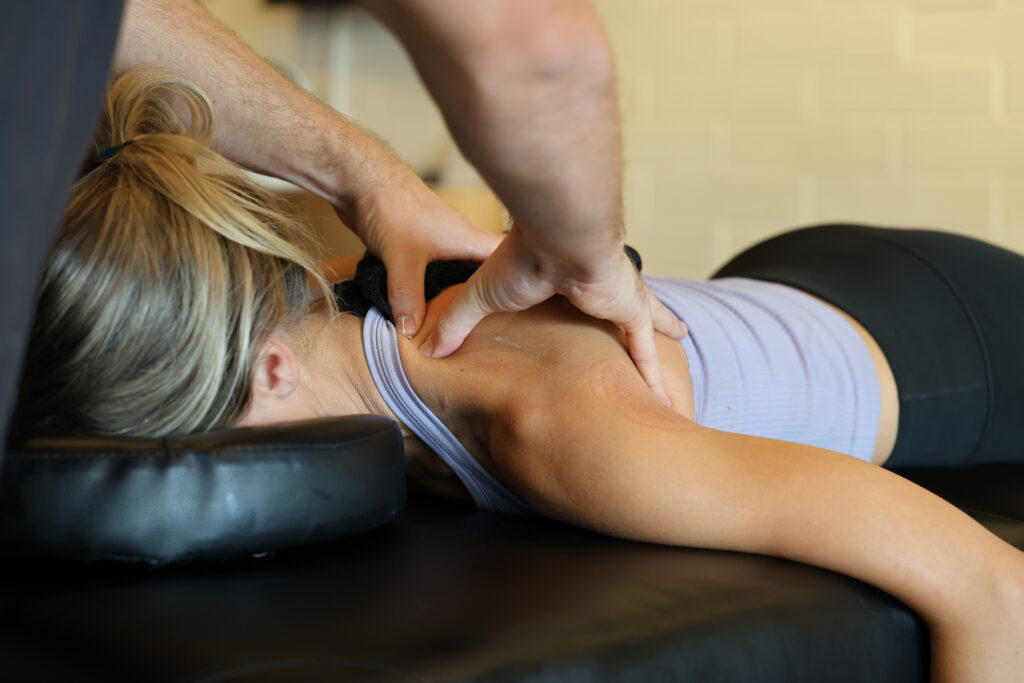
Step one: release the tissues pulling the scapula into the wrong position. This requires a lot of hands on, often intense, manual work on the treatment table. Step two: activate the muscles that should be creating upward rotation. This often requires quite a lot of attempts, with continued correction and hands on guidance from a Doctor of Physical Therapy. If you’re working with an aide, they don’t know how to successfully and consistently get you through this stage (which is my most PT fails). Step three: integrate that new movement pattern into loading under resistance. In other words, you need the PT to prescribe the correct strength training and functional training exercises to now strengthen those muscles that have just recently started showing up to the party.
If you want to contact us or book an appointment, check our business profile page.

Dr. Jonny Blue is a Doctor of Physical Therapy and founder of Land and Sea Physical Therapy in Oceanside, CA. He specializes in orthopedic PT, root cause methodology, and helping active adults in North County San Diego get back to the activities they love without surgery or pain medication.