
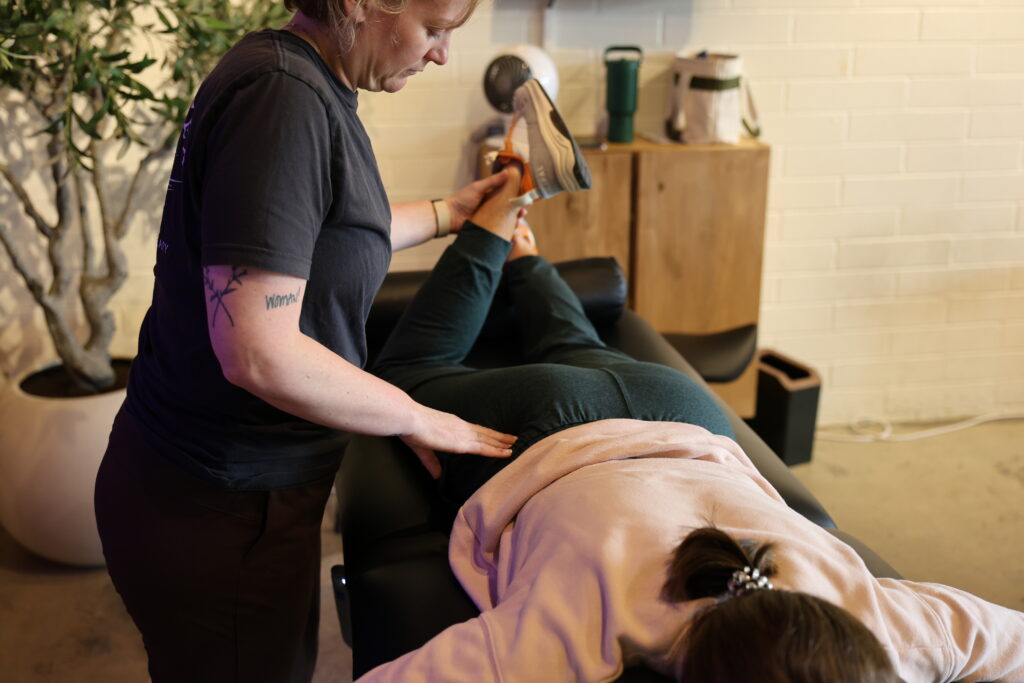
One of the most common things people do when they develop pain on the outside of the hip is aggressively stretch their IT band and piriformis. It feels logical because the area often feels tight. As a result, stretching seems like the obvious solution.
The problem is that most cases of lateral hip pain are actually caused by gluteal tendinopathy, not a tight IT band or piriformis. Stretching may provide temporary relief, but it does not address the underlying issue. In some cases, it may even aggravate symptoms.
The greater trochanter is the bony prominence on the outside of the hip. The gluteus medius and gluteus minimus tendons attach there. When these tendons experience more load than they can tolerate, they become irritated and painful. The IT band runs directly over this area. Certain positions compress the tendons against the bone and increase symptoms. Hip adduction, when the leg moves toward the body’s midline, is one of the biggest contributors.
Why Stretching Can Make It Worse
Many popular stretches place the hip in adduction. A classic IT band stretch, where one leg crosses over the body, is a good example.
The stretch may feel good in the moment. However, it also increases compression of the gluteal tendons against the greater trochanter. This can create temporary symptom relief while continuing to irritate the tissue underneath. For many people with gluteal tendinopathy, reducing compression is often more important than improving flexibility.
Daily Positions That Increase Hip Pain
Understanding tendon compression helps explain why certain everyday positions aggravate symptoms. Crossing your legs while sitting, sinking into low chairs, or standing with your weight shifted onto the painful hip can all increase compression around the irritated tendons.
These positions are not harmful. However, temporarily reducing them can help calm symptoms while the tendons recover.
Sleeping position can also make a significant difference. Many people notice their pain is worse when lying directly on the affected side. Sleeping on your back with a pillow under your knees can help. Another option is sleeping on the unaffected side with two pillows between your legs. Both strategies reduce pressure on the irritated tendons and often improve comfort throughout the night.
Why Rest Alone Doesn’t Work
When hip pain develops, many people assume the answer is complete rest. Unfortunately, tendon problems rarely improve that way.
Tendons need mechanical load to remain healthy. When exposed to appropriate stress, they adapt by becoming stronger and more resilient. When activity is removed completely, tendon capacity often decreases. The tissue then becomes less prepared to handle normal daily demands.
This is why many people become stuck in a frustrating cycle. Pain improves during a period of rest. Activity resumes, and symptoms quickly return.
The goal is not to eliminate load. The goal is to find a level of activity the tendon can tolerate and gradually build from there. For example, if a 30-minute walk consistently causes a flare-up, try reducing the walk to 15 minutes. Once that feels manageable, slowly increase the duration over time.
What About Anti-Inflammatories?
Anti-inflammatory medications can provide short-term pain relief. There is nothing wrong with using them to help manage symptoms.
However, they do not improve tendon capacity. Gluteal tendinopathy is not primarily an inflammatory condition. In most cases, the tissue changes are more degenerative than inflammatory. That is one reason symptoms often persist when treatment focuses only on medication and rest.
Pain management can be helpful, but it should complement rehabilitation rather than replace it. Long-term improvement typically comes from restoring the tendon’s ability to tolerate load.
Running and Gluteal Tendinopathy
For runners, one simple modification that can help is increasing cadence by about five to ten percent. Cadence refers to the number of steps taken per minute. A slightly faster cadence reduces the amount of time spent on a single leg during each stride.
The gluteal tendons work hardest during single-leg support. Increasing cadence can reduce the load on the irritated tissue and make running more comfortable. It is not a complete solution, but it can be a useful tool while you address training volume, strength, and tendon capacity.
For most runners, smart training modifications and progressive strengthening have a much greater impact than stretching alone.
The Bottom Line
Lateral hip pain responds best to activity modification, progressive loading, and targeted rehabilitation. Despite how common it is, stretching the IT band is rarely the solution. Complete rest is usually not the answer either.
Instead, focus on reducing excessive tendon compression while gradually building tendon capacity. Tendons recover when you challenge them appropriately. They do not recover by being avoided altogether.
If you’d like to contact us or schedule an appointment, check out our business profile page.

Dr. Jonny Blue is a Doctor of Physical Therapy and founder of Land and Sea Physical Therapy in Oceanside, CA. He specializes in orthopedic PT, root cause methodology, and helping active adults in North County San Diego get back to the activities they love without surgery or pain medication.